In 2026, the traditional "Design Handoff" the long, often painful process of moving from a designer's vision to a developer's code is officially dead.
We have entered the era of Vision-to-Code. Today, your most powerful design tool isn't a complex software suite; it’s a napkin and a smartphone. Here is how AI has turned manual wireframing into a relic and how you can leverage this to build websites at 10x speed.
What is the "Sketch-to-Site" Revolution?
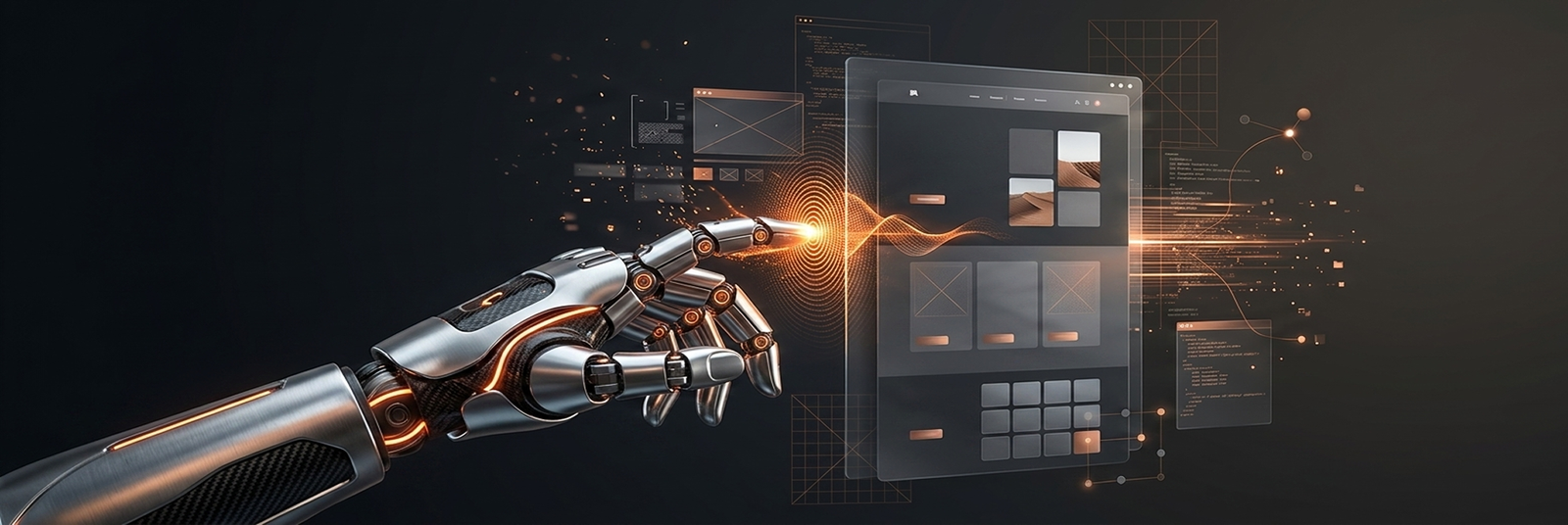
For decades, building a website followed a linear, slow-motion path: sketching on paper, creating digital wireframes, designing high-fidelity mockups, and finally, manual coding.The 2026 Reality: AI collapses these stages into a single, seamless event. Using advanced Multimodal Models like Gemini 1.5 Pro, AI can now "see" a rough drawing and understand its structural intent. It identifies a circle as a profile picture, a rectangle as a button, and a scribble as a paragraph, instantly outputting clean, responsive React or Tailwind code.The Quick Answer: It’s no longer about "drawing" a website; it's about "prompting" a structure.
How It Works: The "Magic" Behind the Screen
The shift from pixels to code is driven by Agentic Design Workflows. Here is the step-by-step breakdown:
- Visual Parsing: The AI vision model scans your sketch (or a screenshot of a site you like) and creates a semantic map. It doesn't just see lines; it sees components.
- Design System Mapping: The AI matches those components to modern frameworks (like Shadcn UI or Material Design), ensuring the buttons and fonts look professional, not hand-drawn."
- Responsive Synthesis: It generates the code for mobile, tablet, and desktop simultaneously. You don't have to "design for mobile" anymore; the AI understands fluid grids automatically."
Why AI-Driven Design is Now a Requirement?
If you aren't using AI in your web design workflow in 2026, you aren't just slower you’re uncompetitive. Here is why the industry has pivoted:
- Elimination of "Pixel-Pushing" Designers used to spend 40% of their time on "grunt work" aligning layers, renaming groups, and fixing margins. AI now handles 100% of this, allowing designers to focus on User Strategy and Brand Storytelling.
- Massive Reduction in Time-to-Market What once required a 2-week sprint moving from idea to sketch, then into Figma, development, and QA can now happen in just minutes. With AI-powered workflows, the process is radically simplified: an idea turns into a sketch and then directly into functional code, often in under 30 seconds, compressing days of coordination and execution into a single prompt.
- Effortless Iteration Want to see the entire site in "Cyberpunk" style instead of "Minimalist"? You don't redraw it. You tell the AI: "Keep this layout but apply a dark-mode, neon-accented UI kit."
The Verdict: Your Napkin is Your New Codebase
In 2026, the most successful web designers aren't those who can draw the straightest lines; they are the curators of AI output. By removing the "hassle" of manual wireframing, AI has freed us to do what humans do best: solve problems with empathy and creativity.